
Here is a look at the most significant, newsworthy events that occurred in September that you may have missed.
Iran Protests
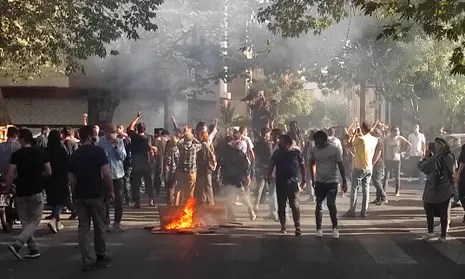
On the 16th of September, Kurdish-Iranian woman Mahsa Amini was pronounced dead in suspicious circumstances following her arrest by the Iranian Morality Police. Amini was arrested for not wearing her hijab ‘correctly’ and was reportedly beaten excessively by Iranian officials. Following the news of her death, protests broke out initially in Tehran and the Kurdistan region before spreading nationwide, with protesters singing anti-government chants and women burning their headscarves in protest against the law on veiling, as well as more broadly against the government of the Islamic Republic. As of the 4th of October, over 150 Iranian citizens have been killed according to Iran Human Rights, and upwards of 1500 protesters have been arrested.
Luhansk and Donetsk no longer fully controlled by Russia
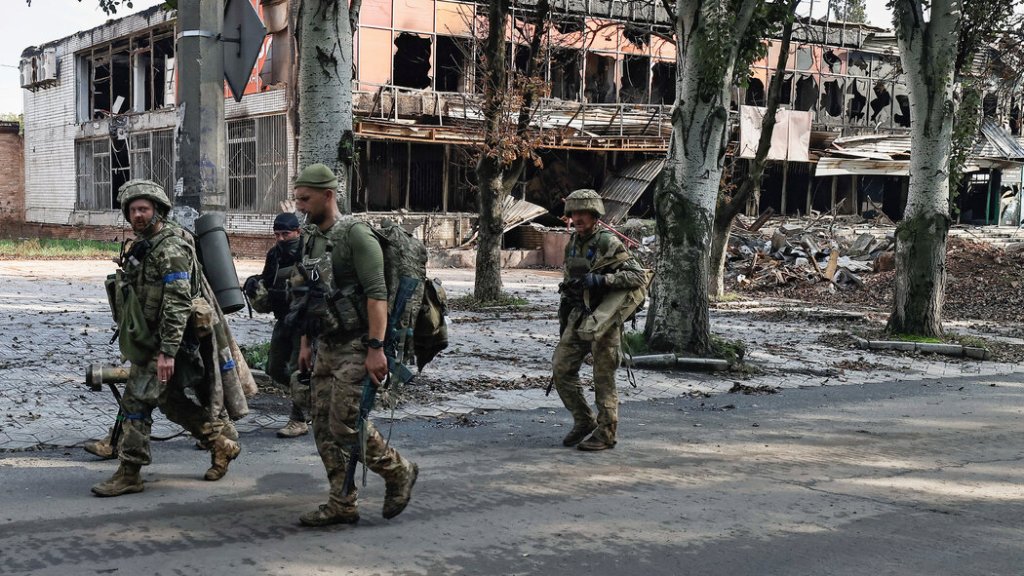
The Luhansk and Donetsk Oblasts fell out of full Russian control last month. President Zelensky announced that the village of Ozerne in Donetsk had been liberated by Ukrainian forces on the 4th of September, and less than a week later on the 10th of September, it was reported that Ukrainian forces were fighting in the outskirts of Lysychansk, Luhansk. The strategic city of Lyman, Donetsk, was liberated by Ukrainian forces on the 1st of October after a three-week battle to retake the city.
300,000 reservists called up
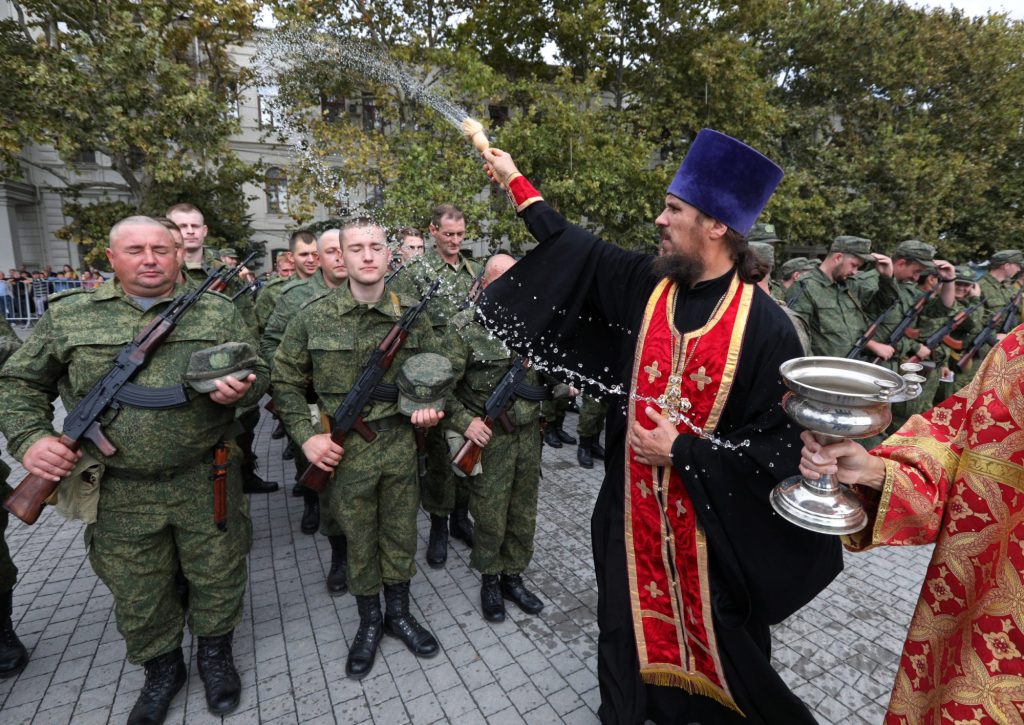
Sergei Shoigu, Russia’s defense minister, announced that Russia would be calling up an additional 300,000 reservists to be ready, if necessary, to be deployed to the ‘Special Military Operation’ in Ukraine. This is the largest mobilisation Russia has experienced since World War II. After a string of humiliating losses all around occupied East Ukraine, Putin is hoping that superior manpower and nuclear threats will keep Russia relevant as a global military power, despite facing countless losses and setbacks on the ground.
Armenia – Azerbaijan hostilities resume
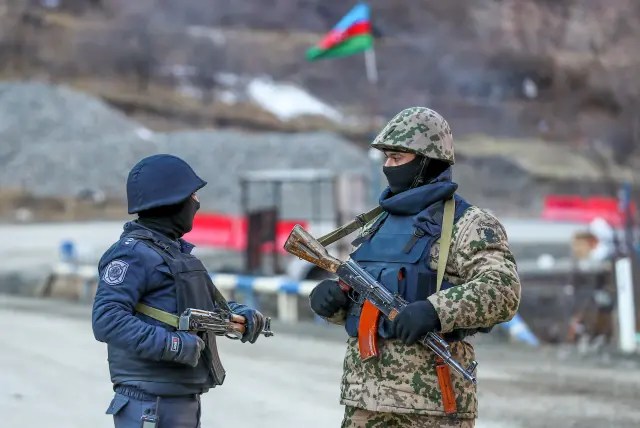
Azerbaijan resumed its attack on Armenia on the 12th of September after Russia’s regional force projection came under question following major losses in Ukraine. Both Armenia and Azerbaijan claim that the other side started the recent spout of clashes, but amongst analysts it is generally agreed that Azerbaijan attacked Armenian positions first. Around 80 Azeri soldiers are believed to have been killed whilst the Armenian number is said to be around 200, although Azerbaijan claims it had killed up to 450 Armenian soldiers. A ceasefire was brokered by Russia on the 13th of September but was immediately broken by both sides. Azerbaijan now occupies 10 km² of Armenian territory along strategic border positions. Serious war crimes including the grusome mutilation of an Armenian female combatant are said to have taken place.
Iran fires missiles into Kurdish Iraq
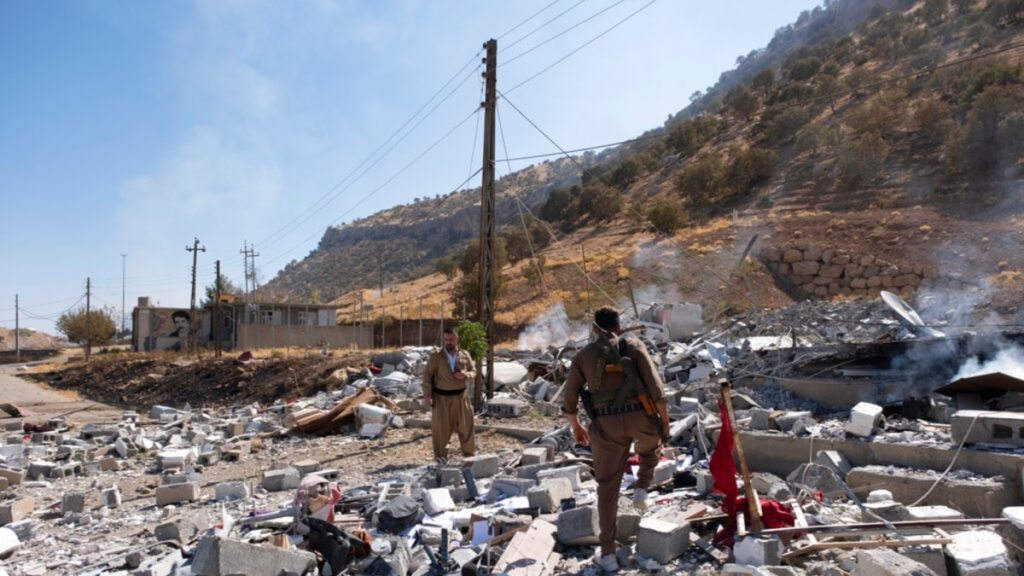
In response to the Iranian protests following the death of Kurdish-Iranian woman Mahsa Amini, the Iranian Revolutionary Guard Corps fired 73 ballistic missiles into Iraqi-Kurdistan, targetting the headquarters of the banned Kurdish armed leftist-nationalist parties, the Democratic Party of Iranian Kurdistan and the Komala Party of Iranian Kurdistan. At least 4 KDPI soldiers were killed in the airstrikes on their base near Koy Sinjaq, whilst three fighters with the KPIK were killed in strikes in the town of Zrgoiz. 32 civilians were wounded in the attacks all around the country according to the Health Ministry of Kurdistan.
Kyrgyzstan – Tajikistan conflict
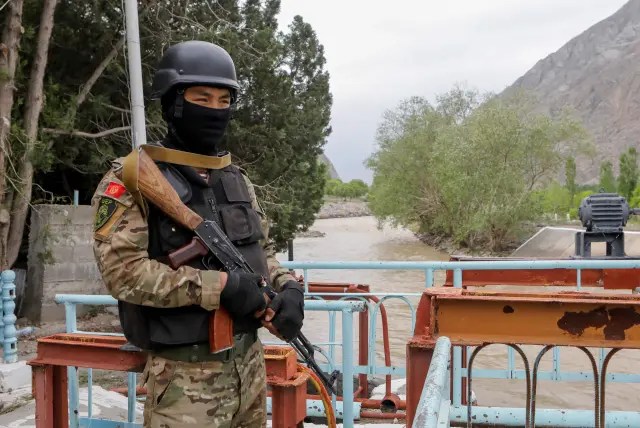
Border clashes between Kyrgyzstan and Tajikistan erupted after a Tajik soldier was killed by Kyrgyz border guards after a Tajik border patrol took position in a demarcated zone. Two days later, tanks and heavy weapons were being used by both sides, and Kyrgyzstan’s Batken Airport was shelled by Tajik forces, all of which contributed to the death of almost 100 people. 15 Tajik civilians in a mosque were reportedly killed in a Bayraktar drone strike. Multiple ceasefires have been agreed upon and broken as casualties built up, but on the 16th of September, a ceasefire brokered between the two heads of state seems to be, at least for the most part, effective on the ground.
Talataye, Mali massacre
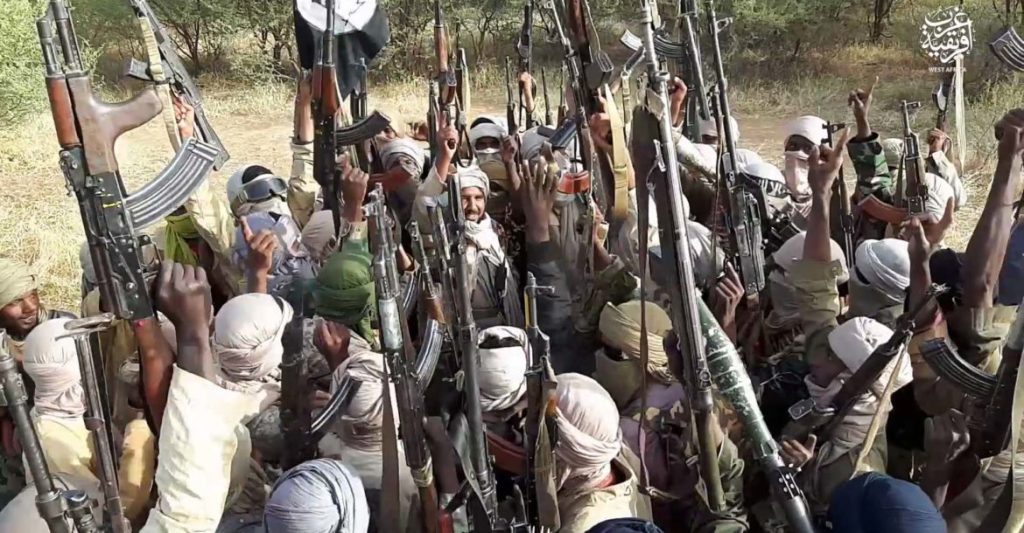
Hundreds of soldiers affiliated with the Islamic State attacked the town of Talataye in Mali on the 6th of September, killing between 30 and 45 civilians according to various local sources. The town of Tataye is controlled by the Touareg pro-Government, anti-Islamic State miltia, Movement for the Salvation of Azawad. The security situation in Mali has been fragile for a decade now, after Islamists hijacked a Touareg-nationalist rebellion, rendering the North of Mali as one of the most dangerous regions in the continent.
Herat Mosque Bombing
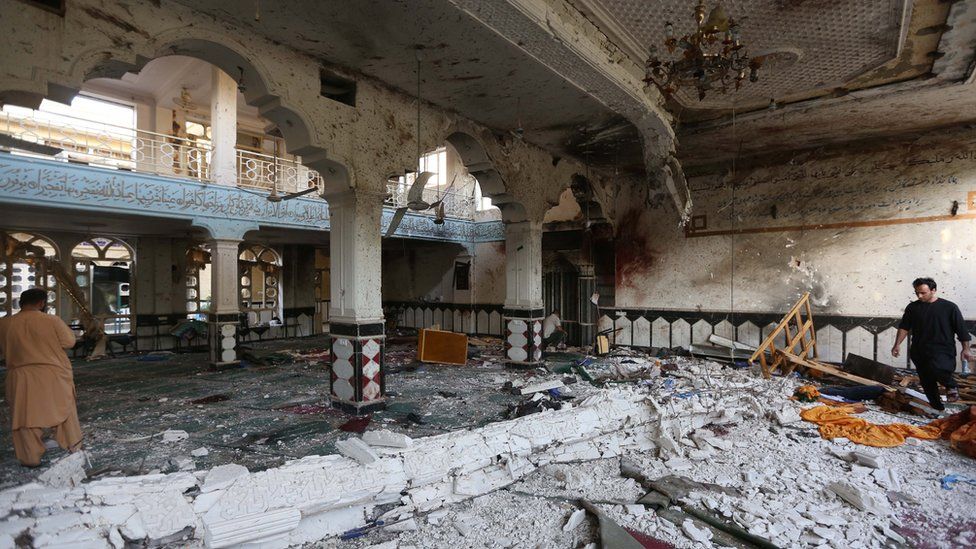
On the 2nd of September, 18 civilians were killed in a suicide attack at a mosque in Herat, Afghanistan. Amongst the dead was a senior pro-Taliban cleric, Mujib-ul Rahman Ansari. Islamic State – Khorasan Province are likely to have carried out the attack. Since their takeover in August 2021, the battle between the Islamic State and the Taliban (now the Islamic Emirate of Afghanistan) has intensified. The security situation in Afghanistan has rapidly deteriorated as IS-KP routinely conducts suicide bombings and routinely attacks Afghanistan’s Hazara minority.
Assassination attempt on Argentinian Vice-President Cristina Fernandez de Kirchner in Buenos Aires

On the 1st of September, Argentine national Fernando André Sabag Montiel attempted to assassinate Argentinian Vice-President Cristina Fernandez de Kirchner as she was greeting reporters in Recoleta, Buenos Aires. The suspect pulled out a handgun, aimed at the Vice-President’s head, and squeezed the trigger, but the weapon failed to discharge. Montiel is a dual Brazilian-Argentine national who had previously been arrested for illegal firearms possession. He also sports a ‘black sun’ tattoo, a symbol often associated with Nazism. Vice-President de Kirchner is facing a long list of corruption charges which could see her spend 12 years behind bars if found guilty.
Lebanese woman holds up bank

Sali Hafez, a Lebanese woman, held a Beirut branch of Blom Bank at gunpoint on the 14th of September after the bank initially refused her access to her savings. Hafez demanded that the bank hand over thousands of dollars to pay for her sister’s cancer treatment which she could not afford. She walked into the store with a realistic-enough-looking toy gun and streamed the ordeal on her Facebook. Lebanon’s economic crisis is worsening day by day as the country battles economic mismanagement and political corruption. The Lebanese Lira has fallen to a record low exchange rate of $1USD=LLل38500, double what it was at this time last year. Banks refuse to allow citizens to access their money as there simply is not enough money circulating in the banking system. Numerous Hafez-style robberies, if you can call it that, have occurred in the last year. Hafez remains on the run.



 The Partisan report
Leave a comment