
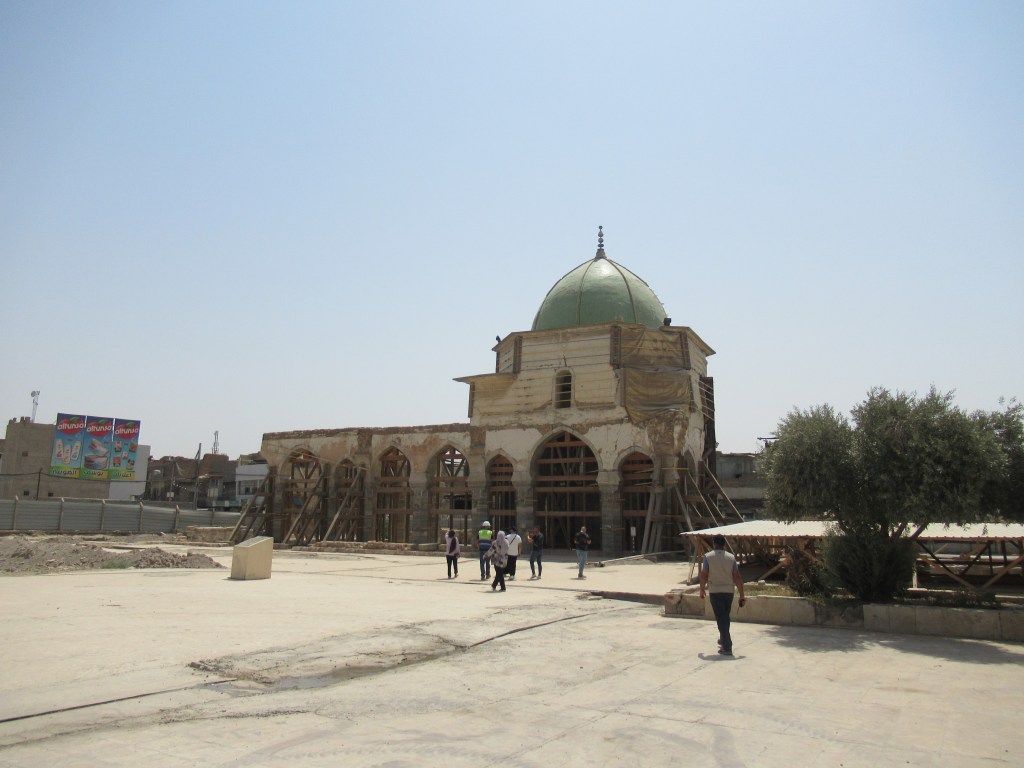
Five years have passed since the liberation of Mosul, yet the scars of the ferocious battle fought between the Islamic State and government forces remain in a city once regarded as a cultural capital in the Arab and Islamic worlds.
After being pushed back from the south, the Islamic State fought their last stand in the historic old city of their former capital, Mosul. Dilapidated buildings lie abandoned, crumbling throughout the once-bustling streets on the western side of the city. I asked my local guide, Othman, when he thought some of the although structurally intact, bullet-ridden buildings on the main streets would be replaced.
“I totally forgot they were there. We don’t notice these bullet holes anymore, it’s normal to us.” He replied.
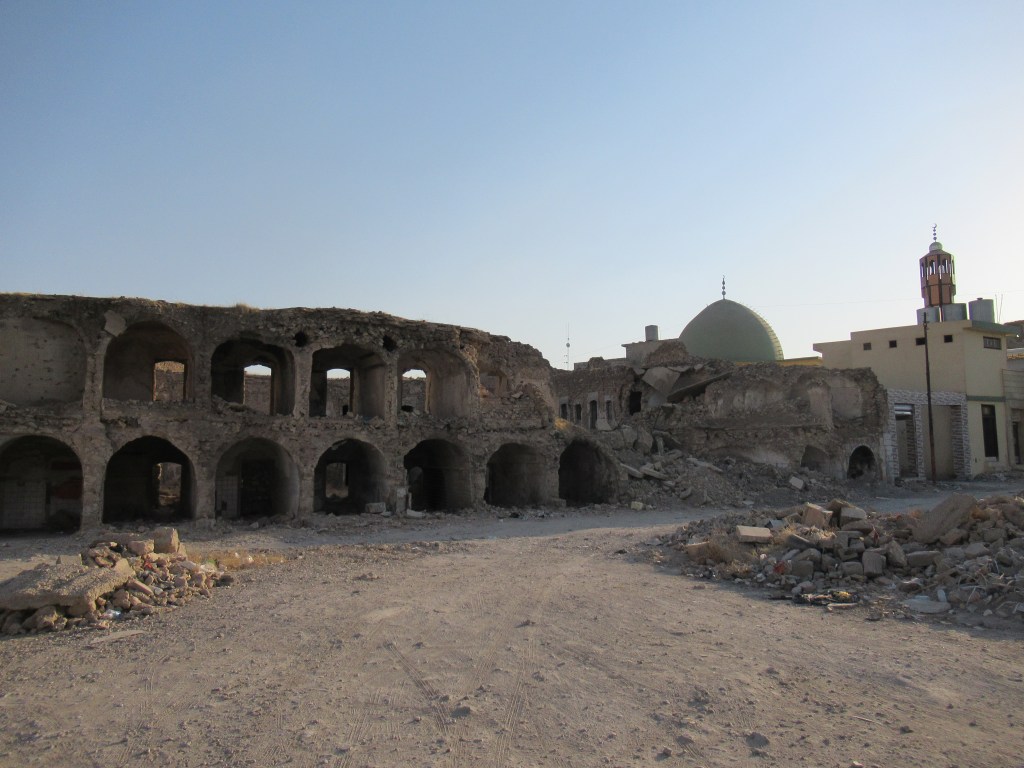
Much of the old city was not as lucky as these few buildings marked only with bullet holes. The 12th Century Al-Nuri mosque and its Al-Hadba minaret, where Abu Bakr Al-Baghdadi proclaimed his title as Caliph, was blown up by insurgents in a move described by the former Iraqi prime minister as a vandalistic concession of defeat, and by a local rapper, Mu3amar (link to channel), as an attack on the proud, Mosuli identity of the city’s residents. Al-Nuri mosque is to residents of Mosul what the Leaning Tower is to residents of Pisa, or the Parthenon is to Athenians. By destroying Al-Nuri Mosque, the Islamic State destroyed the most significant cultural icon of Mosul.
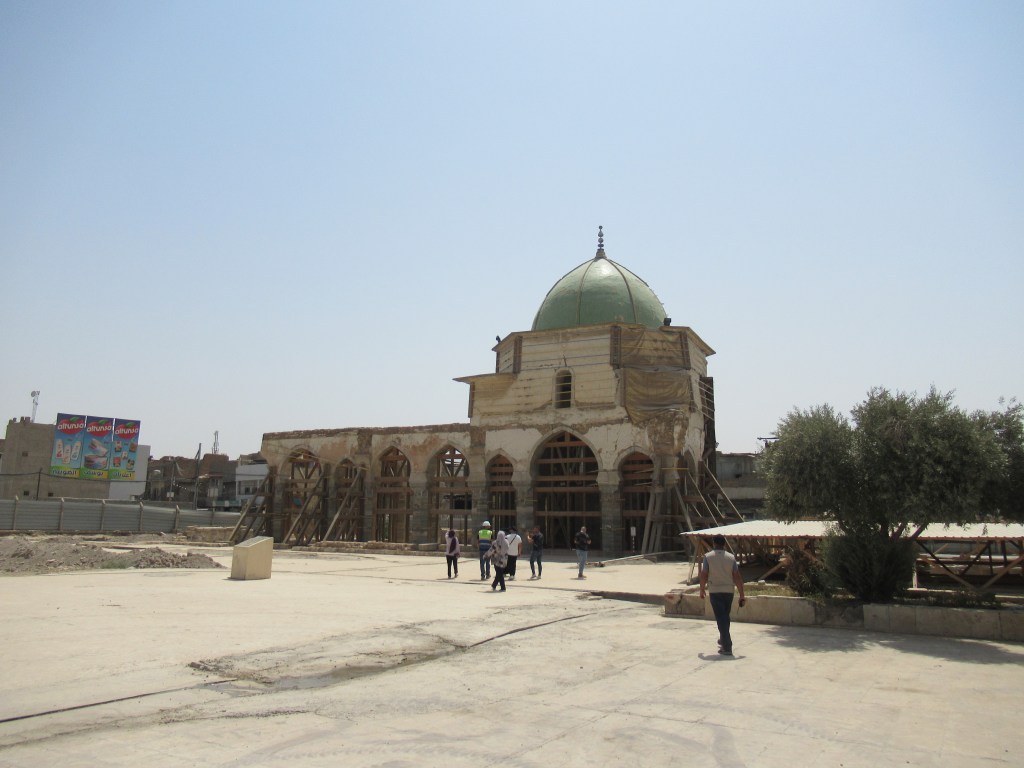
UNESCO has been working on rebuilding the mosque and restoring it to its former beauty with funds coming primarily from the UAE, as well as others. I managed to secure a ten-minute window to visit the restricted construction sites, and was able to see the very place Al-Baghdadi proclaimed his caliphate. Whilst the original completion date was scheduled for early 2023, one UNESCO official estimated that the organisation would finish reconstructing the site in 2025, a delay caused by the Covid-19 pandemic.
Other parts of Mosul have not been as fortunate to receive the amount of funding that the international community has thrown at the old city and Al-Nuri mosque. Countless damaged buildings straddling the western bank of the Tigris River will likely remain in their sorry state for many years to come, as an Iraq marked by one political crisis after another fails to meet the needs of one of its most historically significant cities.
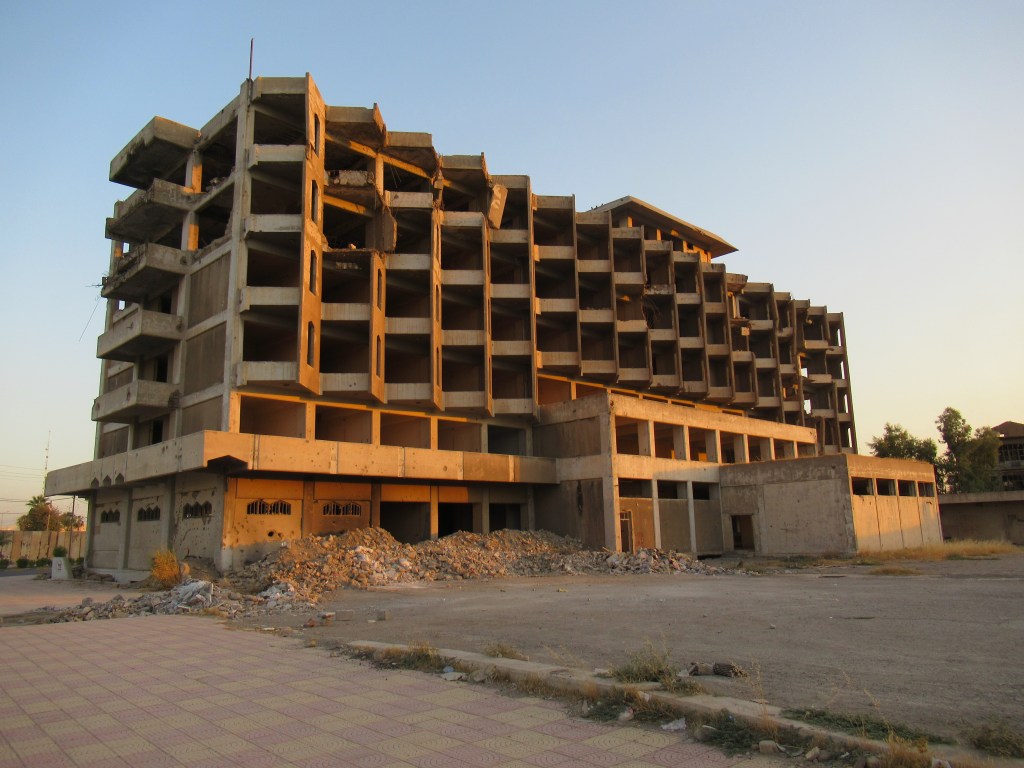
Whilst the scars of war remain evident in the architecture of the city, the people of Mosul show no signs of decay. Mosul’s residents are some of the kindest people in the region, always eager to show strangers the city and show their boundless hospitality to anyone who happens to visit. After the scorching summer sun sets, Mosulis flock to the streets, parks, cafes, and restaurants. Men play dominoes with their friends, families spend quality time with each other, and young boys perform wheelies on their bikes to impress the opposite sex. Life is returning to the city of Mosul, and whilst the scars of the deadly liberation battle may not heal for many years to come, the people have all but moved on from the horrors of the past, and are committed to reviving the spirit of their great city.



 The Partisan report
Leave a comment