
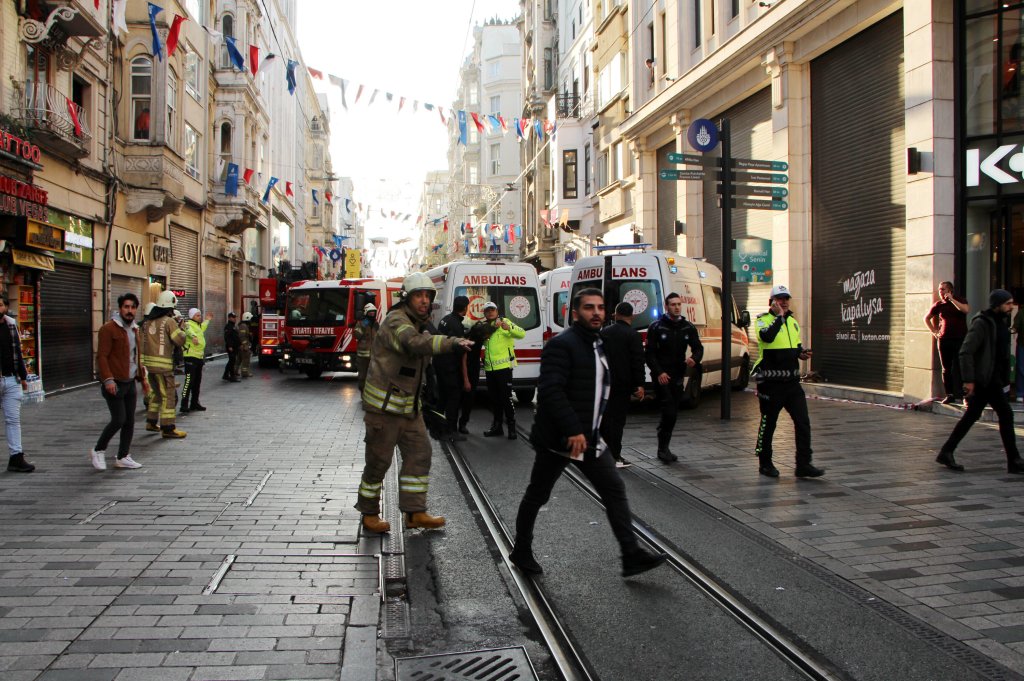
On 13th November, 4:20 PM local time, a bomb was detonated on Istanbul’s iconic Istiklal Avenue, killing eight people and wounding over 80. Soon afterwards, Turkish President Recep Tayyip Erdoğan stated that the attack ‘smelled like terrorism’. Istanbul had not seen a terrorist attack since 1st January 2017, when an Islamic State-affiliated gunman stormed into a nightclub and killed 39 whilst injuring many more. Before then, the Kurdish nationalist Kurdistan Freedom Hawks claimed responsibility for an attack in December 2016 that killed 48 people in two coordinated attacks.
The Kurdistan Freedom Hawks
The Kurdistan Freedom Hawks claim to be a more hardline, splintered Kurdistan Workers Party (PKK) faction, however, the latter have always distanced themselves from the group, with PKK commander Cemîl Bayik stating that the Hawks are a front of Turkish military intelligence, conducting false flag operations to justify Turkey’s uncompromising approach to the Turkish-Kurdish conflicts. Although no evidence is readily available to support nor deny Bayik’s view, analysts are generally split on whether the Kurdistan Freedom Hawks are in some way linked to the PKK, or whether they operate as an independent, rival armed Kurdish nationalist organisation.
Accusation and Denial
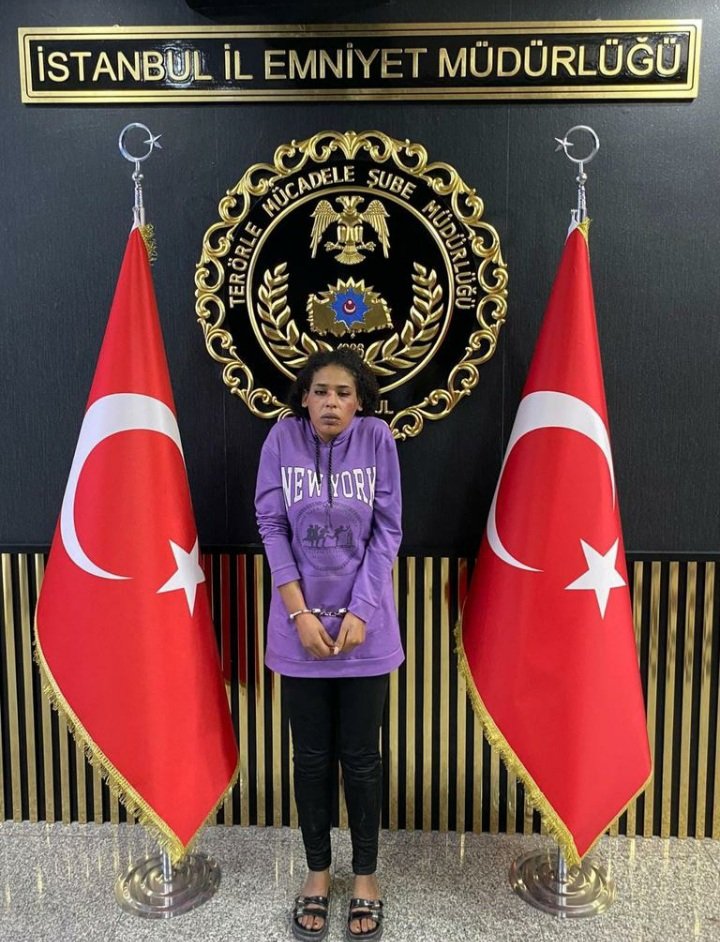
This context is essential to understanding the discourse around Sunday’s deadly attack as more evidence is presented, and more fingers are pointed over the next few days. On Monday 14th November, Turkish Interior Minister Süleyman Soylu accused the PKK of conducting the attack. Turkish police announced that they had detained 46 people in connection with the attack, including Ahlam al-Bashir, a Syrian woman who was suspected of and has since confessed to planting the bomb. Al-Bashir reportedly informed to authorities that she was trained by the PKK-affiliated People’s Defense Units (YPG) and carried out the attack on YPG orders. The YPG immediately denied responsibility for the attacks, with spokesman Nouri Mahmoud releasing a statement on their social media platforms.
“Yesterday, the city of Istanbul witnessed a terrorist explosion in the middle of Istiklal Street, killing unarmed civilians. The government of the AK Party and the Nationalist Movement Party immediately pointed fingers at our forces and started spinning a fictional and unrealistic scenario to prove their false claim.
We categorically deny any link to Ahlam al-Bashir, the perpetrator of the terrorist attack.
The world has become adequately aware of the way our forces fight and defend the rights of our people, fight terrorism and denounce any operations targeting civilians.
Our forces’ work is based on democracy, women’s and human rights, and the fight against terrorism and dictatorships.
The statement claiming that the attacker, Ahlam al-Bashir, entered the Turkish territory coming from the Turkish-occupied Afrin, which has been entirely under the control of the Turkish intelligence of the AK Party, Nationalist Movement Party, and Hay’at Tahrir al-Sham (al-Qaeda) since 2018, confirms that this play was prepared by the government of the AK Party and Erdogan that suffering because of the upcoming elections next year.
Before heading to Indonesia to participate in the G20 summit, Erdogan is trying to find a reason to convince the world, obtaining international approval to launch an attack on the Rojava regions and NE Syria, to be (this attack) his survival card in the upcoming elections.
At a time, women in our forces are achieving heroic achievements in the fight against ISIS terrorism and are clearly influencing, by the slogan “Women, Life, Freedom – Jin, Jiyane, Azadi,” the women’s revolution in Iran, Afghanistan, and the world.
That was an obvious concern for Erdogan’s government and the AK Party, so they started practising slander, lies, and making plays to save their interests at the expense of the freedom of their people and stability in the Middle East.
However, we affirm to our people and the world that we are committed to the values of our people and our revolution, and we will always struggle against dictatorships and terrorism.”
Similarly, the PKK denied responsibility for the attack, stating, “it is out of question for us to target civilians in any way.”
Whilst the Turkish state seems determined to follow, or perhaps create, a Kurdish trail from this attack, a senior Turkish official has told Reuters that they have left the door open to the possibility that this attack may have been committed, or at least inspired, by the dying Islamic State. At the moment, however, the Turkish state seems determined to proceed in its accusation of the PKK and the YPG.
This approach taken by the Turkish state, whilst unsurprising, may be problematic. Although the leading suspect for the attack has confessed to planting the bomb and that she carried out the attack on behalf of the YPG, the subsequent fervent denials by both the YPG and PKK may actually hold credit.
Since the breakdown of the peace process between the PKK and the Turkish state in 2015, attacks carried out by the PKK and its affiliated factions have almost always targeted the Turkish government, and are always claimed by the organisation. Sunday’s attack in Istanbul does not meet the most observable trends in the recent history of the PKK. The attack clearly targeted civilians, and no responsibility for the attack has been claimed by the PKK or any affiliated factions. This does not mean that the PKK or a PKK-affiliated party is not responsible for the bombing, but it does raise questions surrounding the investigation into who committed the attack.
One further inconsistency regarding the Turkish state’s approach is the aforementioned leaving open the door to the possibility that the Islamic State is responsible for the attack. The Turkish state has made it quite clear that the accused attacker explicitly claimed that she was trained by and carried out the attack on behalf of the YPG, so why is this door left open? Could this admission of YPG association be a fabrication? Perhaps the attacker is allied to an anti-YPG faction active in Northern Syria. After all, it was revealed that the attacker crossed into Turkey from Afrin, a region controlled by the factions of the Syrian National Army, all of whom receive support from the Turkish state to varying degrees. Could it be a false flag operation?
Who is actually responsible?
With the investigation into the attacks ongoing and no responsibility claimed, one can only speculate on who is actually responsible for Sunday’s deadly attack.
Firstly, the Kurdistan Freedom Hawks, who were mentioned at the start of this article, may be responsible. Whilst the group has not committed any major attacks since the end of 2016, their track record of being less concerned about civilian casualties than the PKK sees them as potentially responsible for this attack. The Hawks too, however, tend to claim their attacks. If the Hawks do claim responsibility, or if the trail leads to them, this may play into the hands of the false flag attack narrative of the PKK, who already characterise the Hawks as a front of Turkish intelligence.
The attack may also have been carried out by a faction of the Turkish-backed Syrian National Army, and there may be a motive for this. In October, clashes erupted between the Hamza Division and the Levant Front after the former assassinated a prominent Syrian journalist and his pregnant wife. Although both the Hamza Division and the Levant front are backed by the Turkish government, the former has received and continues to receive more support from Ankara. The Al-Qaeda-affiliated Hayat Tahrir al-Sham (HTS) allied themselves with the Turkish-backed Hamza division during these clashes and were instrumental in helping the Hamza Division in emerging victorious. Following the victory, Turkish ‘peacekeepers’ were patrolling Afrin alongside the Al-Qaeda affiliate. Perhaps the Istanbul attacks were carried out by the defeated Levant Front in protest of Turkey’s affiliation with an Al-Qaeda affiliate. Or perhaps the Levant Front may have framed the YPG to encourage Ankara to step up the intervention in Syria against the Syrian Democratic Forces, furthering the Levant Front’s own aims in Syria.
Another possible explanation is that the attack was ordered by a rogue element of the YPG, and that al-Bashir was in fact trained by Kurdish militants in Syria who had split from the YPG and had taken a more violent approach in their war against the Turkish occupation of Syria. The YPG leadership may have been unaware of this operation, which would give them a reason to deny association with the attacker.
Or perhaps the YPG did commit the attack and is denying it for fear of Turkish retribution. This may be the line that comes out of Ankara in the following days and weeks. Turkey has been accused by the PKK of using chemical weapons in the Kurdish regions of Iraq and Syria, and this attack may be in response to those alleged attacks. Just as Ankara denied using chemical weapons, the YPG too may have denied involvement in Sunday’s attacks.
In the near future, Ankara will release more details from the investigations into the Istiklal bombing. Whether or not the Turkish government uncovers the organisation behind these deadly attacks remains to be seen. If a Kurdish group is found responsible, Northern Syria could be subject to further unrest if the Turkish Army extends its occupation and increases hostilities with the YPG, which would serve only to stoke the flames of the Kurdish-Turkish conflict both domestically and regionally.


 The Partisan report
Leave a comment