
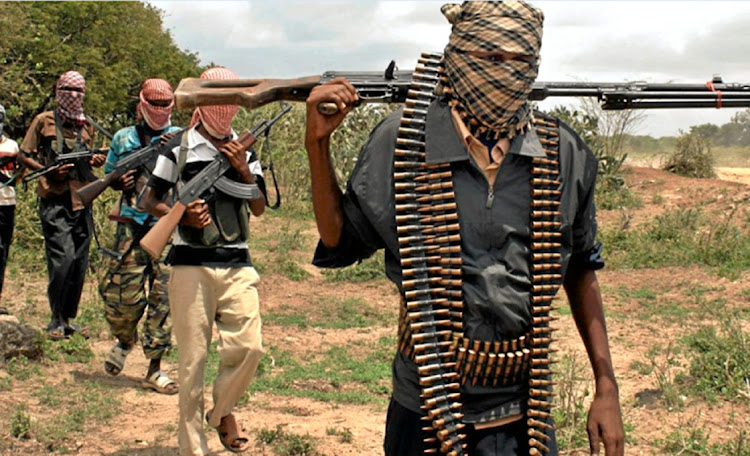
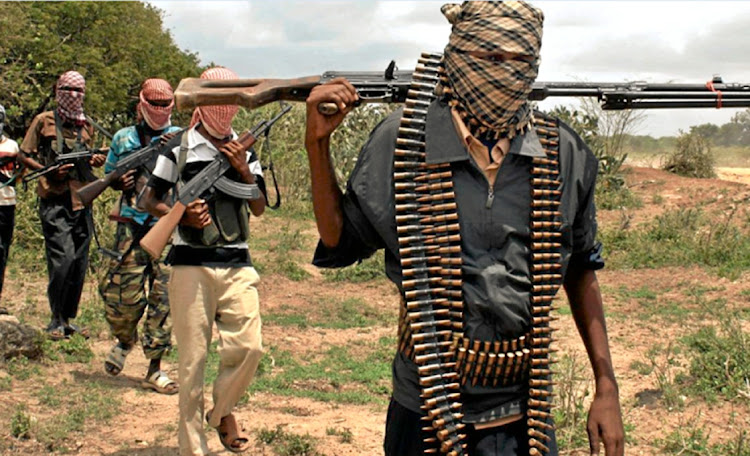
On August 25, Mozambican authorities announced the death of Bonomade Machude Omar (also known as Ibn Omar and Abu Sulayfa Muhammad) following a shootout with national defence forces in the northeastern town of Palma. Supported by Rwandan troops and the Southern African Development Community, Mozambique’s defence forces gunned down the IS-Mozambique commander who has been classified as an international terrorist by the US State Department since 2021.
According to Reuters, Omar led the departments of military and external affairs for the Islamic State’s regional branch in Mozambique, who aim to instil Sharia Law in the country’s Cabo Delgado province by waging war against the Mozambican state. IS-Mozambique’s frequent use of tactics such as displacement and violence against civilians have created an environment of extreme instability in Cabo Delgado. The UN Refugee Agency reported in 2022 that 946,508 people had been displaced in the province since the arrival of the militia, with this number continuing to rise. Furthermore, an estimated 4,000 people have lost their lives due to a series of violent attacks in the region.
The roots of the Islamic State’s presence in Mozambique can be found in the nearby country of the Democratic Republic of Congo (DRC). First established in the 1990s in western Uganda, the Allied Democratic Forces (ADF) transferred its base of operations to the eastern provinces of the DRC, operating as an extreme Islamist group by using tactics such as kidnappings, violent attacks and guerilla warfare to terrorise the local population. After pledging allegiance to ISIS in 2018, the ADF rebranded itself as The Islamic State – Central Africa Province (IS-CAP). The close proximity between the eastern provinces of the DRC and Mozambique’s Cabo Delgado region allowed for the transfer of weapons, fighters and ideology between the two areas, leading to the expansion of IS-CAP to Cabo Delgado. International support, coupled with the widespread poverty, lack of security, and political unrest in the Cabo Delgado province has enabled IS-Mozambique to recruit disillusioned civilians and expand their operations at an alarming rate. Whilst the Mozambican government has promised to defeat the militia, the growth and increased cohesion of IS-Mozambique suggests that achieving this objective will be a long and arduous task.
Since IS-Mozambique emerged in 2017, the group has carried out numerous attacks, with perhaps the most significant taking place in Palma in 2021 where an estimated 2,000 civilians, security officials, and foreign workers tragically lost their lives. Insurgents disguised themselves as policemen, civilians, and soldiers, before executing a multipronged assault on the coastal town as they outnumbered local authorities. Residents were brutally murdered, with testimonies reporting sightings of beheaded bodies in the streets. The massacre resulted in a humanitarian crisis, displaced civilians and the suspension of the $20 billion natural gas project being developed by French company TotalEnergies in the area. Whilst the suspension of the project plunged the region into further economic turmoil, Mozambican president Filipe Nyusi gave the green light for its resumption in April 2023, with the situation in Cabo Delgado stabilising after the arrival of Rwandan troops to support Mozambican security forces. If projections are correct, the TotalEnergies project will create at least 10,000 direct jobs in the area by 2025 and could attract further foreign investment in the gas-rich region. However, the presence of IS-Mozambique remains a constant threat and could jeopardise plans to resume the lucrative project if the situation were to worsen again.
Aside from the 2021 Palma attacks, a six-day occupation of Mocimboa da Praia in August 2020 had brought Bonomade Machude Omar to the attention of intelligence authorities. Believed to have been a key coordinator of IS-Mozambique and the mastermind behind these attacks, the US State Department classified Omar as a specially designated international terrorist in 2021 and have been hunting him ever since.
A Mozambican citizen, Omar was born in Mocimboa da Praia and previously served as a marine in the navy between 2006 and 2008. Studying Islam both in Mozambique and abroad, Omar completed charity work for the African Muslim Agency years before joining IS-Mozambique, where he rose to become a feared and powerful senior commander of the militia. His death was a result of the second phase of operation “Coup Duro II,” where Mozambican forces were able to successfully eliminate Omar during a shootout.
According to Reuters, French energy company TotalEnergies have reported a significant improvement with regard to hindrances caused by the insurgency in the Cabo Delgado province, and the death of Bonomade Machude Omar is indicative of further progress in the fight against IS-Mozambique. The absence of Omar as a senior commander will surely disrupt the operations of the militia, although it is too early to draw conclusions over the extent to which this event will weaken IS-Mozambique.
President Nyusi confirmed Bonomade Machude Omar’s death, addressing the nation on state radio. However, both the president and General Joaquim Rivas Mangrasse – the chief of staff of the Mozambican defence forces – warned the nation that Omar’s death does not necessarily mean the fall of the militia is in sight. Nevertheless, this event may prove to become a significant turning point in the war against IS-Mozambique and is a positive step towards peace in the Cabo Delgado region.



 The Partisan report
Leave a comment