
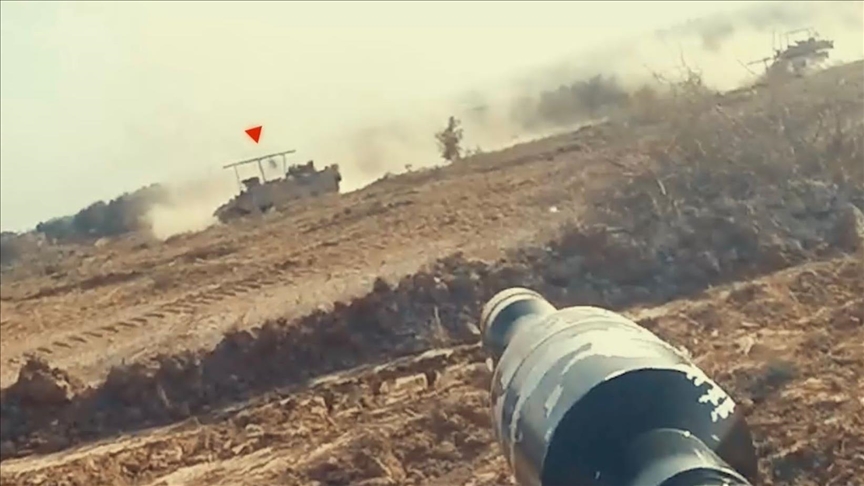
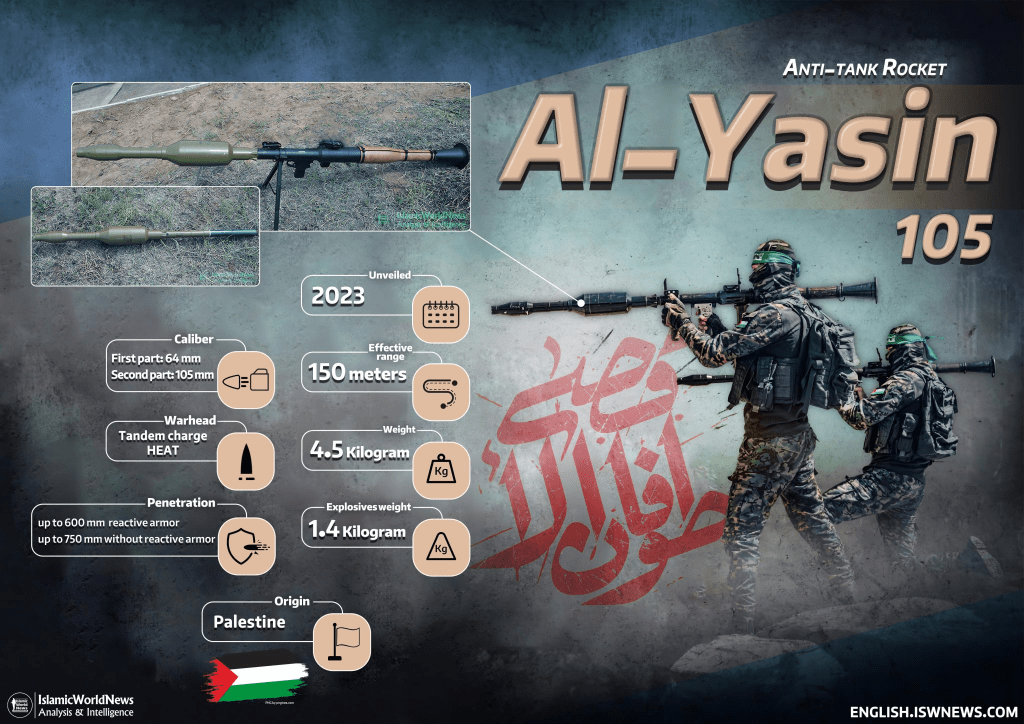
In October 2023, the Palestinian armed group and political party Hamas unveiled a new rocket intended for use in operations against Israeli armoured vehicles as part of the Israeli Defence Forces invasion of Gaza. The Yasin 105, named after the group’s founder Sheikh Ahmed Ismail Hasan Yasin, has, according to mostly unverified reports, been causing damage to Israeli armoured vehicles. Whilst the Israeli Army very rarely reports on its losses in current operations, the available video and photo evidence shows that Hamas’ new tandem-warhead anti-armour rocket has caused damage to some Israeli armoured vehicles in Gaza.
Single vs Tandem Head Projectiles
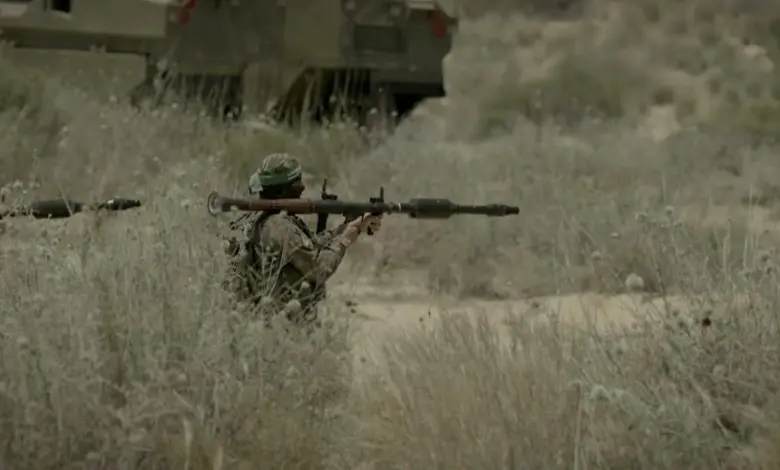
The Yasin 105 is a tandem-warhead anti-tank rocket-propelled grenade, developed by Hamas’ armed wing, the Izz ad-Din al-Qassam Brigades. Single-head and tandem warhead RPG projectiles vary primarily in their design and operation. A single-head RPG projectile is defined by its lone warhead, typically engineered to breach armoured targets upon impact. This warhead detonates upon contact, intending to generate a focused blast to disable the target.
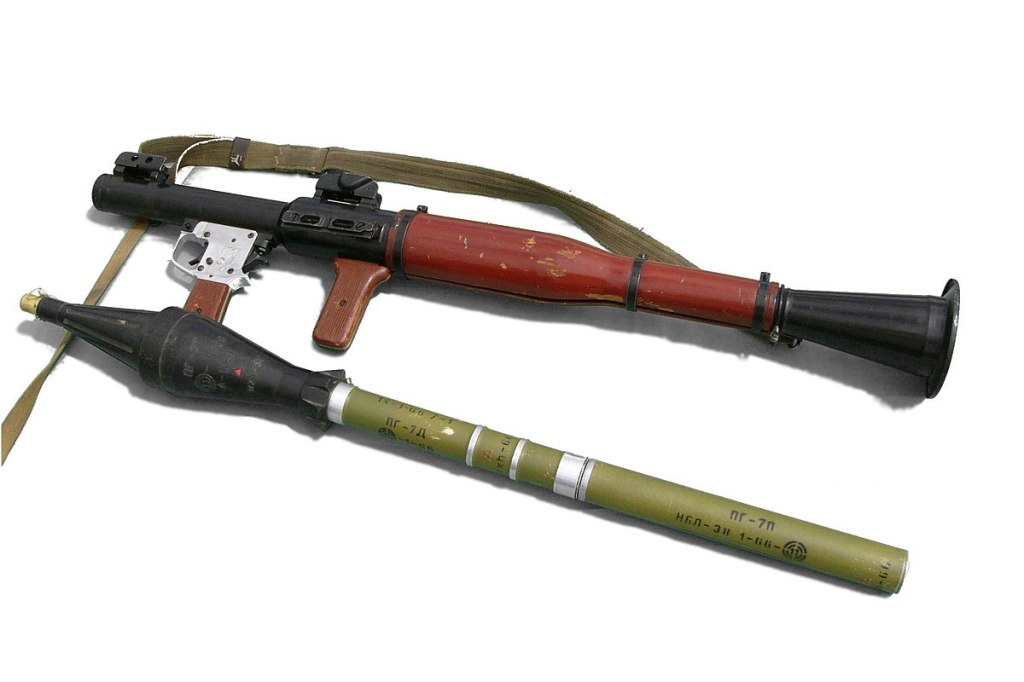
In contrast, tandem warhead RPG projectiles incorporate two warheads and detonations sequentially. The initial warhead, known as the precursor or primary charge, detonates to disrupt or penetrate the target’s reactive armour or other defensive systems. Subsequently, the secondary warhead detonates, exploiting the breach created by the precursor charge to inflict direct damage on the target. Tandem warheads are particularly effective against heavily armoured vehicles, offering superior penetration capabilities compared to single-head RPGs.
Israeli Experiences with Tandem Head Anti-Armour Weapons in the 2006 War in Lebanon
Hamas may have been inspired to design the Yasin 105 by Hezbollah’s successes against Israeli armour in the 2006 Lebanon War.
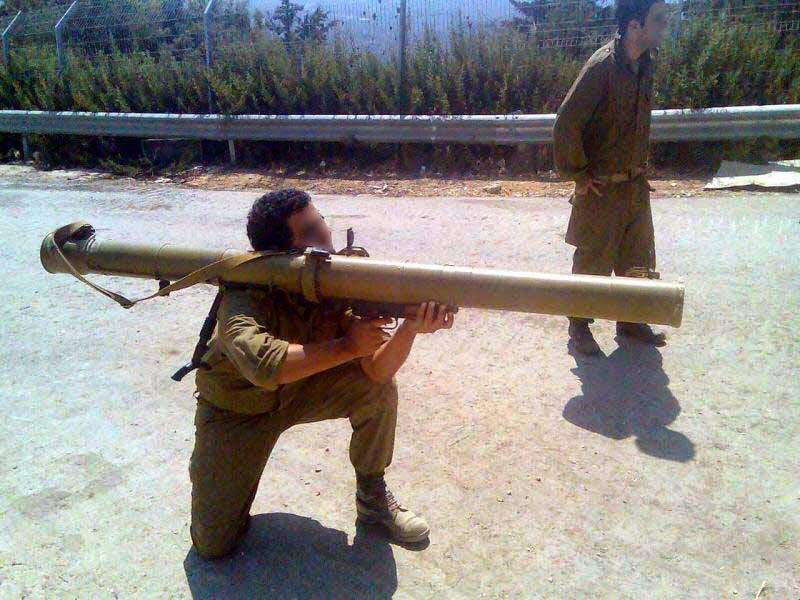
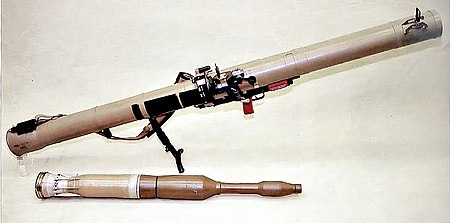
Russia had sold multiple RPG-29s to Syria between 1990-1999 as part of defence agreements between the two countries. Syria, then under the leadership of Hafez al-Assad, provided these anti-tank weapons to Lebanon’s Hezbollah in the early 2000s. Hezbollah’s first recorded use of the RPG-29 was in an unsuccessful kidnapping attempt on an IDF position in the Israeli-occupied Golan Heights.
It is claimed by Israeli officials that the RPG-29, and specifically its tandem warhead PG-29V, was a primary cause of IDF casualties in the 2006 Lebanon War, due to how often it was able to pierce Israeli armoured vehicles, including the Merkava.
Hamas, being unable to import large quantities of weapons due to the ongoing naval blockade of Gaza, tends to build and develop its own weapons and weapons systems. It is highly likely that Hamas was inspired by stories of Hezbollah’s successes using tandem warhead anti-tank rockets against Israeli tanks and armoured vehicles, and would seek to build their own tandem warhead rockets hoping it would be as effective in Gaza and Hezbollah’s use of the RPG-29 and PG-29V was in 2006. It is equally likely that Iran and Hezbollah provided blueprints of these types of rockets to Hamas.
About the Yasin 105
As previously mentioned, the Yasin 105 is a tandem warhead anti-tank missile unveiled in October 2023 by Hamas’ armed wing, the Izz ad-Din al-Qassam Brigades. There are reports of the weapon also being used by the Quds Brigades (the armed wing of Palestinian Islamic Jihad), and the Popular Front for the Liberation of Palestine’s (PFLP) Abu Ali Mustafa Brigades.
In the numerous videos released by Hamas and its affiliate Telegram channels, it appears that the Yasin 105 is typically launched by local variants of the RPG-7. It has an effective range of up to 150 metres, the precursor warhead is 64mm, whilst the main explosive warhead is 105mm.
The Israeli Merkava 4 tank is outfitted with an active protection system that can both detect and intercept threats using sensors and radars. This protection system will in most cases defeat the precursor detonation and warhead, but in the split second that the active protection is dealing with the precursor warhead, the main warhead can breach the protection system and detonate, potentially disabling the tank and killing or wounding its crew. Israeli tanks are heavily armoured, but if the missile were to hit a vulnerable part of the tank, such as the ammunition storage, rear hatch, or the space between the turret and hull, the tank would be seriously damaged.
Is it effective?
The question of whether the Yasin 105 is effective is impossible to give a definite answer to. In the vast majority of cases, the available footage showing the Yasin 105 being deployed in Gaza would yield inconclusive results to the question of whether it is an effective weapon and whether it does cause significant damage to Israeli armour. It certainly could have, and it certainly has caused varying extents of damage to Israeli armoured vehicles in the last six months of fighting in Gaza. It certainly has the potential to cause more damage than single-warhead rockets, and it is reportedly cheap to produce, costing a mere $200 per rocket.
The Yasin 105 is the most effective rocket of its kind that is available to Hamas and other Palestinian militants. It has the potential and has destroyed heavy Israeli armour. It would have no issue disabling lighter armoured vehicles and has done so already.
A major reason why it is difficult to assess how effective the weapon can be is due to the available footage. Hamas and its media outlets frequently post videos showcasing the use of the Yasin 105 rocket against Israeli armour in Gaza. However, the fighters typically retreat quickly after firing the rocket, resulting in limited footage of the aftermath, including post-impact damage and potential casualties. Some may say this is because the rockets fail to destroy Israeli armour, but this view does not take into consideration the on-the-ground conditions. A large explosion would give away the position of the fighter, and even if the rocket did destroy the tank, the possibility of Israeli infantry, or possibly a second tank firing on the position of the Palestinian fighter is a real risk.



 The Partisan report
Leave a comment